
Your Voice Is Now Clonable — What Musicians Need to Know |
Suno and Udio can copy your singing voice. The technology is here. The laws are not. |
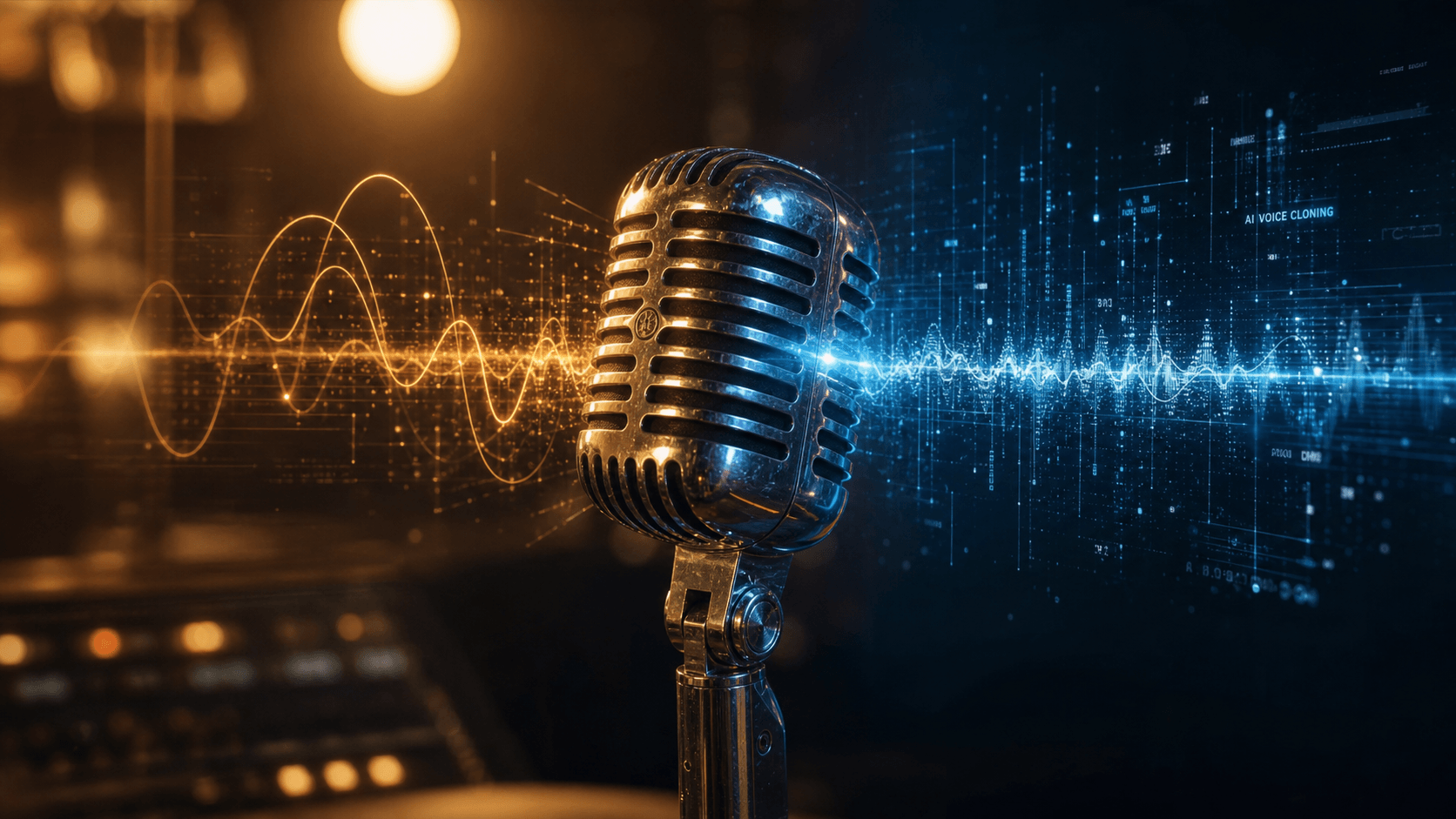
Suno can clone your voice now.
Not just generate a generic singing voice. Clone your specific voice. Your timbre, your tone, your quirks, the way you pronounce certain words. Feed it enough samples and it can sing anything in your voice.
Udio has similar capabilities. So do several other tools. The technology that seemed like science fiction two years ago is now a feature in consumer software.
For musicians, this is either the most exciting development in years or an existential threat. Probably both. Here's what you need to know.
How Voice Cloning Works
The process is surprisingly simple. You provide audio samples of your voice — the more the better, but some tools work with as little as a few minutes of clean recordings. The AI analyzes the acoustic properties: pitch range, formant characteristics, breathiness, vibrato, all the subtle elements that make your voice yours.
Then you type lyrics. Choose a style. And the AI generates new audio in your voice.
The results are not perfect. Close listening reveals artifacts. The emotional nuance of a real performance is hard to replicate. But for many use cases — demos, background vocals, content creation — it is good enough. And getting better fast.
Suno's implementation, released in V5.5, lets you create custom vocal models that persist across sessions. You can generate multiple songs in the same cloned voice. You can share the model with collaborators. You can, in effect, create a digital version of yourself that sings on demand.
What This Means for Working Musicians
If you make your living from session work, this is concerning. Why hire a singer when you can license their voice model and generate unlimited performances?
The answer, for now, is quality and authenticity. AI vocals are convincing but not indistinguishable from human performances. They lack the micro-variations, the emotional intentionality, the lived experience that comes through in real singing.
But the gap is closing. And for many commercial applications — jingles, background music, content soundtracks — the AI version is already good enough.
Singers who rely on volume work — quick turnarounds, multiple versions, flexible scheduling — may find demand shifting toward licensing voice models rather than booking sessions. The economics are compelling: one recording session to capture the voice, then unlimited generation forever.
The Licensing Question
Here's where it gets complicated. Who owns a cloned voice?
Current law is unclear. Voice is not explicitly protected by federal copyright. Some states have right of publicity laws that might apply, but the boundaries are untested. Can you clone your own voice? Probably. Can someone else clone your voice without permission? Unclear. Can they use that clone commercially? Even less clear.
Udio is trying to get ahead of this with licensing partnerships. Deals with Universal Music Group, Warner Music, and Merlin suggest a future where voice cloning happens through authorized channels. You want to use a famous singer's voice? License it properly, generate within agreed parameters, everyone gets paid.
Suno is following a similar path. The free tier doesn't include commercial rights. The Pro tier does, with restrictions. Both companies are essentially building the plane while flying it — establishing norms and practices that might become standard, or might be overturned by legislation or litigation.
The Jorja Smith Incident
In December 2025, a song called I Run by Haven went viral. The track allegedly used an AI-generated clone of Jorja Smith's voice without permission. Her label, FAMM, claimed the track was made using AI trained on her vocals and demanded royalty shares.
The song was temporarily removed from streaming services before being re-released with new vocals. But the incident highlighted the legal gray zone. No court ruled on whether the voice cloning was legal. The platforms made a business decision, not a legal one.
This is the pattern we're likely to see repeated: takedowns based on public pressure and business risk, not clear legal standards. Which means uncertainty for everyone involved.
The RIAA Lawsuits
The Recording Industry Association of America, representing Universal Music Group, Sony Music, and Warner Records, filed landmark lawsuits against Suno and Udio in June 2024.
The allegations: willful copyright infringement on an almost unimaginable scale. The claim: these companies trained their AI models on millions of copyrighted tracks without authorization. The potential damages: up to $150,000 per infringed work.
Suno essentially admitted to using commercial music for training but argued it constituted fair use. The case is ongoing. The outcome could reshape the entire AI music landscape.
And then there's the $3 billion Anthropic lawsuit filed in January 2026. Universal Music Group, Concord, and ABKCO sued over alleged infringement of more than 20,000 songs. This one is about lyrics ingestion rather than music generation, but the principle is the same: AI companies using creative work without permission to train their systems.
What Musicians Should Do Now
First, understand your rights. Or rather, understand that your rights in this area are currently unclear. Voice is protected in some jurisdictions under right of publicity laws, but the application to AI-generated content is untested.
Second, consider whether you want to embrace or resist this technology. Some musicians are licensing their voices proactively, seeing it as a new revenue stream. Others are fighting to prevent any cloning without explicit consent.
Third, document everything. If you don't want your voice cloned, say so explicitly in contracts and public statements. If you do license your voice, get everything in writing: what uses are permitted, what compensation you'll receive, how the model can be shared or transferred.
Fourth, stay informed. The legal landscape is evolving fast. What's true today may not be true in six months. The musicians who navigate this well will be the ones paying attention.
The Creative Opportunity
It's not all threat. Voice cloning opens creative possibilities that didn't exist before.
Songwriters can hear their compositions in realistic vocals without booking studio time. Producers can experiment with different vocal styles quickly and cheaply. Artists can create multilingual versions of their songs without learning new languages.
The technology is a tool. Like any tool, it can be used well or poorly, ethically or unethically. The question isn't whether voice cloning will exist — it already does — but how we'll manage its implications.
The AI Sessions Take
We've been experimenting with AI music tools since they first emerged. The progression has been remarkable. What started as novelty — weird robotic vocals, obvious artifacts, limited range — has become genuinely useful.
But we have also seen the concerns of working musicians. The fear that technology will devalue human creativity. The frustration that companies are building these tools without consulting the people most affected by them.
The path forward requires balance. Embracing new capabilities while protecting creator rights. Building tools that augment human creativity rather than replacing it. Establishing norms and laws that ensure fair compensation.
Voice cloning is here. What we do with it is up to us.
Join The AI Sessions and explore what is possible — while staying informed about what is at stake. |
0 Comments
Join the conversation
Be the first to comment
Share your thoughts above.