
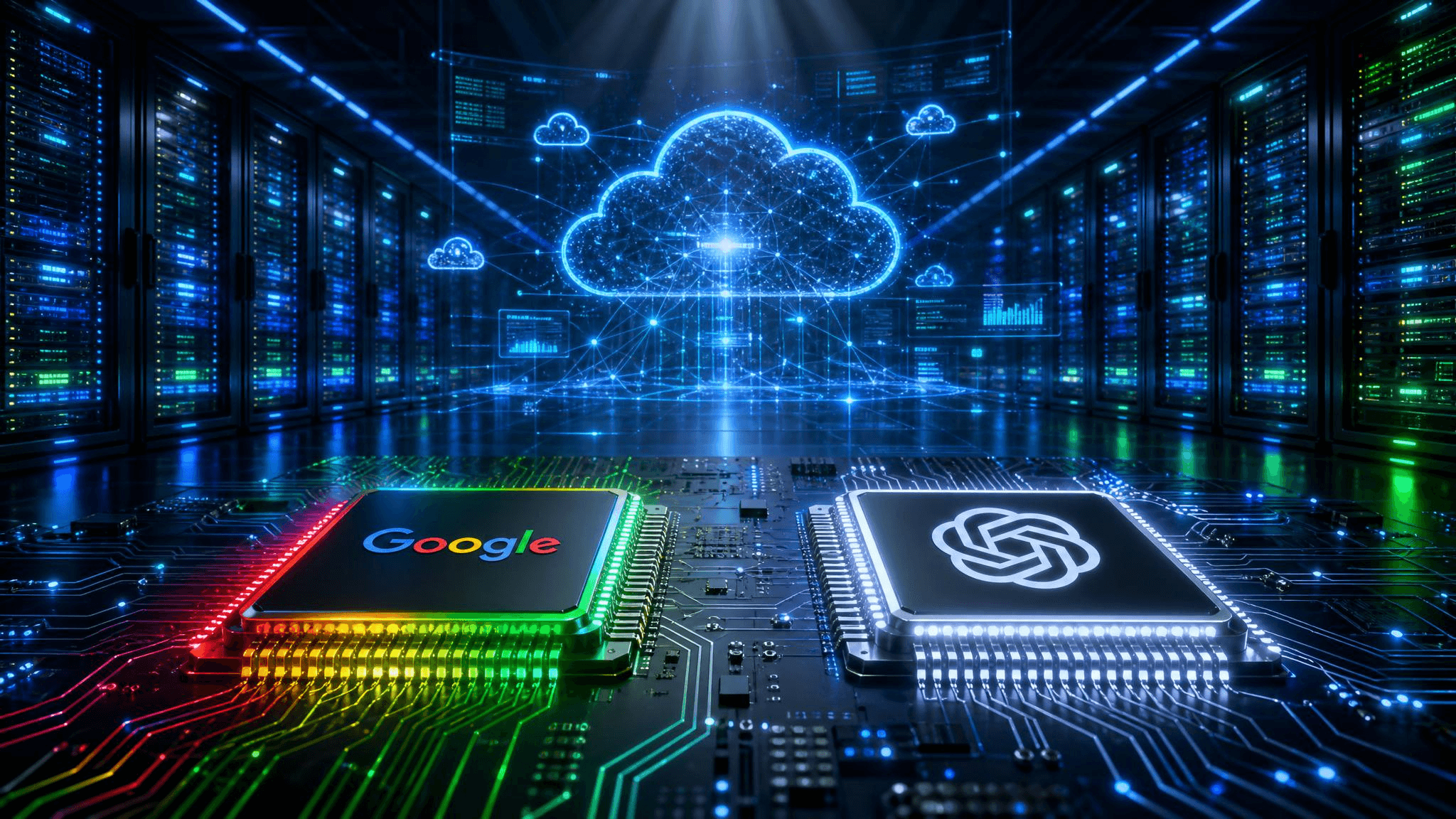
OpenAI Just Diversified
In June 2025, OpenAI started renting Google TPUs. This is their first meaningful use of non-Nvidia processors. And it changes everything.
In June 2025, OpenAI started renting Google TPUs through Google Cloud to power ChatGPT.
This is their first meaningful use of non-Nvidia processors. It is also a crack in the foundation of the Microsoft-OpenAI partnership that built the current AI landscape.
Why This Matters
OpenAI has been Microsoft-exclusive on infrastructure since their partnership began. Azure credits. Nvidia GPUs. The whole stack. Microsoft invested $13 billion into OpenAI. In exchange, they got exclusive cloud rights and priority access to the most important AI models being built.
This deal shaped the entire AI industry. Microsoft went from a company that missed mobile to a company that dominates the AI conversation. OpenAI went from a research lab to a household name. The partnership was the most important business arrangement in technology.
Now OpenAI is using Google chips.
Not because they are leaving Microsoft. The partnership continues. But because GPT-5 is coming this summer. The compute requirements are massive. And diversification became necessary.
What Are TPUs
TPUs are Tensor Processing Units. Google designed them specifically for machine learning workloads. Unlike Nvidia GPUs, which are general-purpose processors adapted for AI, TPUs are built from the ground up for neural network computations.
For certain tasks, TPUs are faster and more efficient than GPUs. They excel at the specific matrix operations that power large language models. They use less power. They generate less heat. They cost less per unit of computation.
They are also different. Code written for GPUs does not run on TPUs without modification. Optimization strategies that work on Nvidia hardware do not translate directly. Using TPUs requires expertise and investment.
OpenAI made that investment.
The Ripple Effects
This decision has consequences that extend far beyond OpenAI.
Microsoft's exclusive hold on OpenAI weakens. Not dramatically, but noticeably. If OpenAI can use Google infrastructure for production workloads, they can negotiate harder on Azure pricing. They can threaten to shift more workloads if Microsoft does not meet their terms. The power dynamic shifts.
Google's cloud business gains a high-profile customer. Google Cloud has always been third behind AWS and Azure. Landing OpenAI, even partially, is a validation of their AI infrastructure. It signals to other companies that Google TPUs are production-ready for the most demanding AI workloads.
Nvidia faces real competition for the first time in the AI training market. Nvidia GPUs have been the default choice for AI development. Their dominance has made them one of the most valuable companies in the world. TPUs represent the first credible alternative for large-scale training.
This does not mean Nvidia is in trouble. Their ecosystem is massive. Their software stack is mature. Their customer relationships are deep. But they no longer have a monopoly on the highest-end AI training workloads.
The Strategic Implications
OpenAI's diversification signals something important about the future of AI infrastructure.
The era of single-vendor dependence is ending. The companies building the most important AI systems cannot afford to be locked into one cloud provider or one chip manufacturer. They need flexibility. They need bargaining power. They need the ability to shift workloads based on cost, performance, and availability.
This is how mature industries operate. No major company depends on a single supplier for critical components. They build relationships with multiple vendors. They play competitors against each other. They ensure continuity even if one supplier fails.
AI is maturing. The infrastructure decisions are becoming strategic rather than tactical. The companies that survive will be the ones that build resilient systems instead of optimized ones.
The Trust Question
Same month, OpenAI signed a significant defense contract with the U.S. military. This is not the research-lab OpenAI of 2015. This is not even the startup OpenAI of 2020. This is a mature technology company with government contracts, diversified infrastructure, and a CEO who says he is not totally against ads in ChatGPT.
Altman stressed that altering answers based on advertiser payments would be a trust-destroying moment. But the door is open. The business model is evolving. The nonprofit origins feel increasingly distant.
The question is whether OpenAI's diversification makes them stronger or less trustworthy.
Stronger, because they are building resilient systems. They are not dependent on single partners. They can weather disruptions. They can negotiate from strength.
Less trustworthy, because they are becoming harder to hold accountable. When a company works with everyone, they answer to no one. When their infrastructure spans multiple clouds and chips, their decisions become harder to trace.
What This Means for Creators
If you are building with AI, this infrastructure shift matters to you.
It means the tools you use will become more reliable. Diversified infrastructure fails less often. It means the costs of AI services might stabilize as competition increases. It means the pace of improvement might accelerate as different infrastructure approaches compete.
It also means the companies building AI tools are becoming more like traditional technology companies. They are making strategic business decisions. They are optimizing for sustainability rather than growth at all costs. They are thinking long-term.
This is good news for anyone who depends on these tools. The wild early days of AI are ending. The stable middle period is beginning. The infrastructure is maturing.
The AI Sessions is where creators stay ahead of the curve. New tools. New techniques. New possibilities. Join us and see what is coming next. |

0 Comments
Join the conversation
Be the first to comment
Share your thoughts above.